Mold Risks After Heavy Summer Rainfall Near Lake Orienta
Summer storms push Lake Orienta water into crawlspaces and wall cavities across Altamonte Springs. Mold can start in 24-48 hours - here's how to stop it.
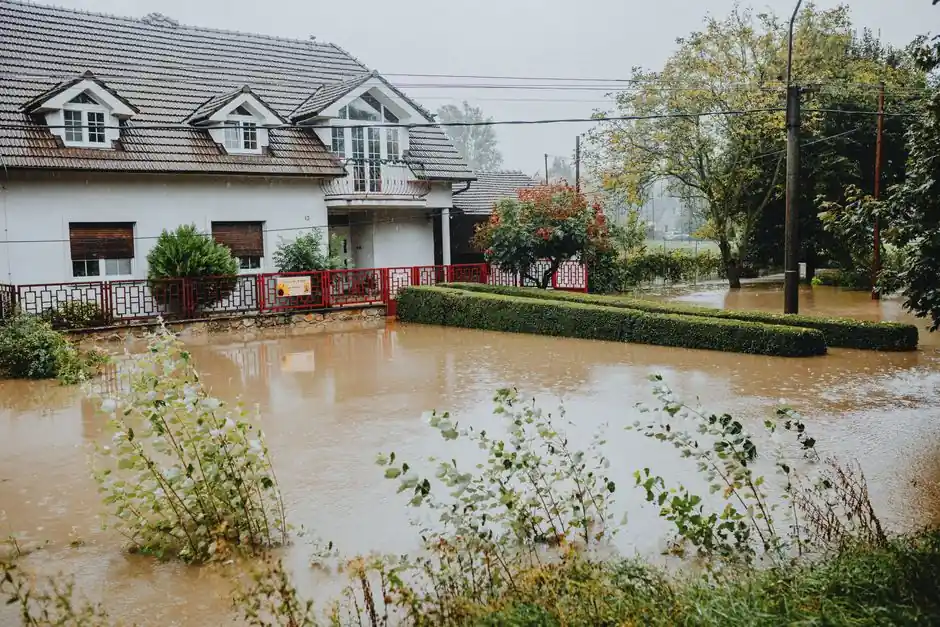
Heavy summer rain near Lake Orienta causes mold because it forces water into places a home never dries on its own - crawlspaces, wall cavities, and the base of sliding doors - and mold can begin colonizing those wet materials in as little as 24 to 48 hours. The mold risks after heavy summer rainfall near Lake Orienta are not just about the water you can see; they are about the moisture that stays trapped behind baseboards and under flooring for weeks. This post walks through why the lake area floods the way it does, how fast mold actually grows in a Florida summer, the entry points we find most often, and exactly what to do in the first 24 hours after a storm.
We are Altamonte Mold Force, and we work these neighborhoods every storm season. What follows is the same guidance we give homeowners standing in a wet living room at 9 p.m. after a July downpour.
Why Lake Orienta Rainfall Creates Mold Problems So Fast
Lake Orienta rainfall creates mold problems so fast because the lake sits at the bottom of a bowl of developed land, and summer storms drop two to four inches in under an hour on ground that is already saturated from the previous week's rain. Water has nowhere to go but sideways - into garages, under slab edges, and through the seams where a driveway meets the foundation.
Altamonte Springs averages roughly 50 to 55 inches of rain a year, and more than half of that falls between June and September. That is the same window when indoor humidity in a closed-up house runs 65 to 75 percent without air conditioning cycling. Add a wet wall cavity to that and you have a petri dish.
The lake itself matters less than the elevation around it. Homes on the low side of Orienta Avenue and the streets feeding into Lake Orienta Hills sit a few feet below the storm drain inlets. When those inlets back up - and they do, several times each summer - water pools against the slab for hours. Concrete wicks that moisture inward. You will not see it on the carpet for a day or two. By then, the drywall behind the baseboard is already damp to the touch.
This is the pattern behind most of the Mold Remediation in Lake Orienta Hills jobs we run in July and August. Same streets, same storm drains, same wet baseboards.
How Quickly Mold Can Grow After a Florida Summer Storm
Mold can grow after a Florida summer storm in 24 to 48 hours when the indoor temperature is 77 to 86 degrees and the relative humidity stays above 60 percent - which is most of an Altamonte Springs summer. The 24-to-48-hour window is not a marketing line. It is the standard the restoration industry uses because it is what we see in the field.
Here is the timeline we work against:
- 0-2 hours: Water is still liquid and moving. This is the cheapest window to fix the problem - extraction and air movement.
- 2-24 hours: Drywall paper, carpet backing, and particleboard furniture begin absorbing moisture. Musty odor starts in tight rooms.
- 24-48 hours: Visible mold colonies can appear on drywall, baseboards, and the underside of laminate flooring. This is when the job changes from water damage cleanup to mold remediation.
- 48 hours-2 weeks: Colonies spread along organic materials. Spores load the air. Occupants with allergies or asthma start noticing it before they see it.
Humidity is the accelerator. A wet wall cavity in a 78-degree house with no dehumidifier will grow mold faster than the same cavity in a 68-degree house. That is why we run dehumidifiers and air movers the same day, not the next morning.
The Hidden Entry Points Rainwater Uses Near Lake Orienta
Rainwater near Lake Orienta almost never enters through the obvious hole in the roof. It enters through the seams, penetrations, and grade-level gaps that were fine for 20 years and then stopped being fine after one storm dropped three inches in 40 minutes.
The entry points we find most often:
- Sliding door tracks. The weep holes clog with pollen and debris. Water backs up over the threshold and into the carpet pad.
- Garage-to-house transitions. The step-down is often the lowest point in the home. Water sheets under the door and wicks into the shared wall.
- Stucco cracks at the slab line. Hairline cracks let water into the wall cavity from the outside. You see the stain on the interior drywall weeks later.
- AC condensate lines and hose bibs. Rain-driven water follows the penetration into the frame.
- Attic vents and ridge caps. Wind-driven rain gets past the shingle edge and drips onto ceiling insulation, which holds moisture like a sponge.
We see the same pattern in the older ranch homes around Mold Remediation in Spring Valley, where original 1970s stucco and single-pane sliders take on water at every storm seam. If your home is more than 25 years old and has never had the door tracks and slab-line cracks sealed, that is the first place to look.
How to Prevent Mold After Heavy Rain Near Lake Orienta
Preventing mold after heavy rain near Lake Orienta comes down to three things: get the water out, get the air moving, and get the humidity down below 50 percent within the first day. Everything else is secondary.
What we tell homeowners to do the moment the storm passes:
- Pull furniture and boxes off wet carpet. Anything sitting on wet flooring traps moisture underneath and stains the carpet permanently.
- Run the AC, not the fan-only setting. Air conditioning removes humidity. A box fan just moves wet air around.
- Set up a dehumidifier in the wettest room. A standard 30-pint unit will not keep up with a flooded room. You need a 70-pint unit or a commercial dehumidifier to pull a 200-square-foot room down to 45 percent.
- Wipe down hard surfaces with a diluted disinfectant. Tile, vinyl, and sealed concrete can be cleaned. Carpet pad cannot - it has to come out.
- Photograph everything before you move it. If you file a claim, the adjuster wants to see the water line on the baseboard.
If you do those five things within 24 hours, you cut your mold risk dramatically. If you do nothing, you are rolling the dice on a remediation job that costs 10 times what the drying would have.
For homes that flood repeatedly - and there are a dozen streets around the lake that do - the better long-term answer is a preventative plan. Our team handles Mold Prevention Altamonte Springs FL for homeowners who are tired of the same August scramble every year.
What to Do When Rainwater Enters a Home Near Lake Orienta
When rainwater enters a home near Lake Orienta, the first 24 hours decide whether you are looking at a cleanup or a remediation. Call your insurance agent if you plan to file, then start extracting water. Do not wait for the adjuster to arrive before you start drying - most policies require you to mitigate further damage, and letting water sit is the opposite of that.
Step by step:
- Shut off power to any flooded room at the breaker if outlets are submerged.
- Extract standing water with a wet/dry vac or a shop pump. A wet/dry vac moves about 10 to 15 gallons before you empty it - plan on a lot of trips for a flooded room.
- Pull up carpet and pad if the water came through the slab or from outside. Pad is not salvageable once it is soaked with storm water.
- Cut out drywall 12 inches above the visible water line if the wall is wet. This is the step most homeowners skip and most remediations require.
- Run dehumidifiers and air movers continuously for 3 to 5 days. Not overnight. Continuously.
- Check the moisture content of framing with a pin meter before you put anything back. If it reads above 16 percent, it is not dry.
If the water came in through a roof leak or an attic penetration, the drying job is bigger than it looks. Insulation holds water against the ceiling drywall, and the mold shows up on the ceiling, not the floor. That is a job for Structural Drying and Moisture Control Altamonte Springs FL - commercial drying equipment and moisture mapping, not box fans.
When to Schedule a Mold Inspection After Storm Water Damage in Altamonte Springs
Schedule a mold inspection after storm water damage in Altamonte Springs within 48 to 72 hours if any of these are true: water sat for more than a day, the wet area was larger than 10 square feet, you smell a musty odor, or anyone in the house has allergies or asthma. Those are the four triggers we use.
You do not need an inspection for a small spill you dried the same afternoon. You do need one for anything that involved storm water, because storm water carries soil, organic matter, and bacteria that feed mold growth faster than a clean supply-line leak.
A proper inspection is not a guy with a flashlight. It includes:
- Moisture mapping with pin and pinless meters across walls, floors, and ceilings.
- Thermal imaging to find wet cavities behind finished surfaces.
- Humidity readings in every room, compared to outdoor baseline.
- Air and surface sampling if visible growth is present or the odor is unexplained.
If you want the full picture before you commit to a remediation scope, we run Mold Inspection Altamonte Springs FL with same-week scheduling through storm season. The report tells you what is wet, what is growing, and what actually needs to come out.
Common Mistakes We See After Summer Storms
The mistakes we see after summer storms are almost always the same five, and every one of them turns a $1,200 drying job into a $6,000 remediation.
- Running a fan on a wet carpet. Air movement without dehumidification just spreads humidity through the house.
- Pulling up carpet but leaving the pad. The pad is the sponge. If it is wet, it goes in the trash.
- Drying for one day and calling it done. Framing takes 3 to 5 days to dry with proper equipment. One day is not enough.
- Painting over a water stain. Latex paint over a damp substrate traps moisture and peels within a month. The mold grows behind the paint.
- Assuming the smell will go away. A musty odor is the mold telling you it is still there. It does not resolve on its own.
We also see homeowners treat a storm leak like a plumbing leak. They are not the same. Storm water brings in outdoor spores and soil, and it usually affects a wider area - the whole wall, not one cabinet.
When to Call a Professional
Call a professional when the wet area is larger than 10 square feet, when water sat for more than 24 hours, when you can see or smell mold, or when the moisture came from outside the home. Those are the four lines we draw.
Below those lines, you can handle it yourself with a wet/dry vac, a dehumidifier, and patience. Above them, you need commercial drying equipment, containment, and in some cases HEPA filtration to keep spores from spreading to the rest of the house while the work is happening.
Altamonte Mold Force handles the whole sequence - inspection, drying, remediation, and putting the room back together. We are a local crew, we know which streets around Lake Orienta flood first, and we have dried more wet baseboards in this zip code than we can count. If you are not sure whether your situation is a cleanup or a remediation, call us and we will tell you straight.
Frequently Asked Questions
Can heavy summer rain cause mold near Lake Orienta?
Yes. Heavy summer rain near Lake Orienta drives water into wall cavities, crawlspaces, and under flooring, and mold can begin growing in 24 to 48 hours when indoor humidity stays above 60 percent. The lake-area storm drains back up several times each summer, which is what pushes water against slabs and into homes.
How soon should I dry a home after storm water enters?
Start within 2 hours and finish within 24 to 48 hours. Extraction, dehumidification, and air movement in the first day cut mold risk dramatically. Framing takes 3 to 5 days to dry fully, so keep the equipment running even after the floor feels dry to the touch.
When should I get a mold inspection after heavy rain in Altamonte Springs?
Get an inspection within 48 to 72 hours if water sat for more than a day, the wet area exceeded 10 square feet, you smell a musty odor, or anyone in the home has asthma or allergies. A moisture-mapped inspection tells you whether you are looking at drying or remediation.
Does homeowners insurance cover mold caused by storm water?
Usually yes, if the mold is the direct result of a covered peril like wind-driven rain or a storm-created opening. Most Florida policies cap mold coverage at $10,000 unless you bought a rider. Long-term neglect or repeated flooding without mitigation is typically excluded, so document everything and dry fast.
Who can help with water damage and mold cleanup near Lake Orienta?
You want a local crew that does both - drying and remediation - so you are not coordinating two companies. Altamonte Mold Force handles water extraction, structural drying, mold removal, and repairs for homes around Lake Orienta and across Altamonte Springs. Call (407) 358-0466.
Get Help With Mold Remediation in Altamonte Springs
If your home took on water this storm season and you are not sure whether it dried, we will come out, map the moisture, and tell you honestly what needs to happen. Our team provides Mold Remediation Altamonte Springs FL for homeowners and property managers across the Lake Orienta area.
Call (407) 358-0466 to schedule an inspection or drying assessment. The sooner we get equipment in, the smaller the job gets.